OceanBase
English日本語简体中文
ドキュメントホーム
製品
エコシステム
リリース

データベース

OceanBase CloudOceanBaseデータベース

ツール

OceanBase Cloud PlatformOceanBase移行サービス(OMS)OceanBaseデベロッパーセンターOceanBase Admin Tool

データベース

OceanBase CloudOceanBaseデータベース

ツール

OceanBase Cloud PlatformOceanBase移行サービス(OMS)OceanBaseデベロッパーセンターOceanBase Admin Tool
OceanBase CloudOceanBaseデータベース

OceanBaseデベロッパーセンター

V4.5.1
  • ドキュメント概要
  • 製品概要
    • OceanBase開発者センターとは
    • 機能と特徴
    • 製品アーキテクチャ
    • 使用上の制限
    • ユーザーインターフェース
  • クイックスタート
    • デスクトップ版ODC
      • クイックスタート
      • デスクトップ版ODCのインストール
      • デスクトップ版ODCの使用
    • Web版ODC
      • クイックスタート概要
      • Web版ODCのデプロイ
      • Web版ODCの使用
  • データソース管理
    • データソースの作成
    • データソースとプロジェクトの連携
    • データベースの運用・保守
      • セッション管理
      • グローバル変数の管理
      • ごみ箱の管理
  • SQL開発
    • SQLの編集と実行
    • PLコンパイルとデバッグ
    • コマンドラインウィンドウ
    • 結果の編集とエクスポート
    • 実行分析
    • テストデータの生成
    • システム設定
    • スマートSQL開発
    • 主な機能の概要
    • データベースオブジェクト
      • テーブルオブジェクト
        • 概要
        • テーブルの作成
      • ビューオブジェクト
        • 概要
        • ビューの作成
        • ビューの管理
      • マテリアライズドビューオブジェクト
        • 概要
        • マテリアライズドビューの作成
        • マテリアライズドビューの管理
      • 関数オブジェクト
        • 概要
        • 関数の作成
        • 関数の管理
      • ストアドプロシージャオブジェクト
        • 概要
        • ストアドプロシージャの作成
        • ストアドプロシージャの管理
      • シーケンスオブジェクト
        • 概要
        • シーケンスの作成
        • シーケンスの管理
      • プログラムパッケージオブジェクト
        • 概要
        • プログラムパッケージの作成
        • プログラムパッケージの管理
      • トリガーオブジェクト
        • 概要
        • トリガーの作成
        • トリガーの管理
      • タイプオブジェクト
        • 概要
        • タイプの作成
        • タイプの管理
      • シノニムオブジェクト
        • 概要
        • シノニムの作成
        • シノニムの管理
      • 外部リソースオブジェクト
        • 外部リソース
        • 外部リソースの作成
        • 外部リソースの管理
  • 変更リスク管理
    • プロジェクト協働管理
      • プロジェクト管理
      • データベース管理
      • 論理データベースの管理
      • オブジェクトストレージの追加
      • プロジェクトメンバー管理
      • データマスキング
      • メッセージ通知管理
        • メッセージ通知の概要
        • プッシュ履歴の表示
        • プッシュチャネルの管理
          • プッシュチャネルの作成
          • プッシュチャネルの表示・編集・削除
          • カスタムチャネルの使用例
        • プッシュルールの管理
    • ユーザー権限管理
      • ユーザーとロール
      • 自動権限付与
      • プロジェクト権限の申請
      • データベース権限の申請
      • テーブル/ビュー権限申請
    • 安全規範
      • 環境設定
        • SQLチェック仕様
        • SQLウィンドウ仕様
      • リスク管理
        • リスク管理の概要
        • リスク識別ルールの管理
        • 承認フローの管理
      • データマスキングアルゴリズム
      • 操作監査
  • チケット管理
    • 構造とデータのインポート
    • スキーマとデータのエクスポート
    • データベース変更管理
    • 論理データベースの変更管理
    • マルチデータベース変更管理
    • ロックフリースキーマ変更
    • シャドウテーブルの同期
    • 構造比較
  • ジョブスケジューリング
    • データアーカイブ
    • データのクリーンアップ
    • パーティション計画の管理
      • パーティション計画の管理
      • パーティションポリシーの設定
      • パーティションポリシーの使用例
    • SQLスケジュールタスク
  • システム統合
    • ログイン連携
    • 承認連携
    • SQLレビューの統合
    • 踏み台ホストの統合
    • 大規模モデルの統合
  • デプロイガイド
    • デプロイの概要
    • デプロイ前の準備
    • シングルノードODCのデプロイ
    • 高可用性ODCのデプロイ
    • デプロイの検証
  • アップグレードガイド
    • アップグレードの概要
    • アップグレード前の準備
    • シングルノードODCのアップグレード
    • 高可用性ODCのアップグレード
    • アップグレード検証
    • アップグレード失敗時のロールバック
  • ベストプラクティス
    • SQL開発でよく使われるコツ
    • ODCチームスペースの素晴らしい世界へようこそ
    • OceanBase APのリアルタイムSQL診断機能の解説
    • OceanBase履歴データソリューション
    • ODC SQLチェック仕様による高リスク操作の自動識別
    • ODCとの企業レベルアカウントシステムの迅速な連携
    • ODCによるデータベース・テーブルのシャーディング管理と変更
    • データマスキングの管理と運用の実践
    • エンタープライズレベルの管理・協働:データベースの変更を守るために
  • トラブルシューティング
    • ODCのトラブルシューティングの基本手順
    • 情報収集
      • 実行時環境とバージョン情報の確認
      • Web版ODCのログを確認する
      • ODCデスクトップ版のログを表示する
      • ODC関連のフルリンクログを表示する
      • ODC MetaDBデータの確認
      • OceanBase V4.xのインデックス状態を照会する
      • OceanBase V1.4.x ~ V3.2.x のインデックス状態の確認
      • JVMランタイム情報の収集
      • tcpdumpを使用したパケットキャプチャ
    • よくある質問
      • デスクトップ版ODCのインストールに関する質問
      • Web版ODCのデプロイおよび起動に関する質問
      • 接続情報に関する質問
      • コマンドラインツール関連の質問
      • DDLステートメントの表示に関する質問
  • リリースノート
    • V4.5
      • ODC V4.5.0
    • V4.4
      • ODC V4.4.0
      • ODC V4.4.1
      • ODC V4.4.2
      • ODC V4.4.3
    • V4.3
      • ODC V4.3.4
      • ODC V4.3.3
      • ODC V4.3.2
      • ODC V4.3.1
      • ODC V4.3.0
    • V4.2
      • ODC V4.2.4
      • ODC V4.2.3
      • ODC V4.2.2
      • ODC V4.2.1
      • ODC V4.2.0
    • V4.1
      • ODC V4.1.3
      • ODC V4.1.2
      • ODC V4.1.1
      • ODC V4.1.0
    • V4.0
      • ODC V4.0.2
      • ODC V4.0.0
    • V3.4
      • ODC V3.4.0
    • V3.3
      • ODC V3.3.3
      • ODC V3.3.2
      • ODC V3.3.1
      • ODC V3.3.0
    • V3.2
      • ODC V3.2.3
      • ODC V3.2.2
      • ODC V3.2.1
      • ODC V3.2.0

PDF をダウンロード

このページには現在中国語/日本語版がなく、英語版を表示しています。
ドキュメントフィードバック
  1. ドキュメントセンター
  2. OceanBaseデベロッパーセンター
  3. V4.5.1

Create a trigger

最終更新:2026-09-03 09:10:51

Specify the basic information
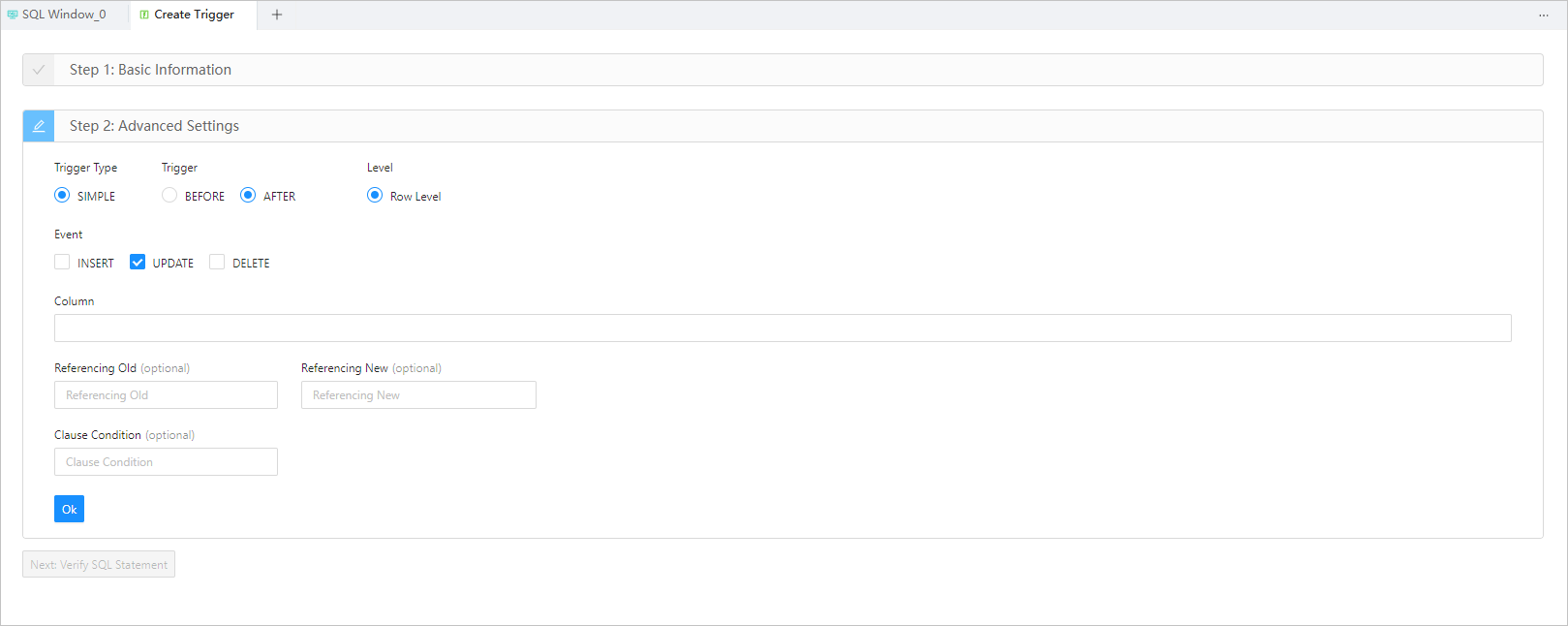
Configure the advanced settings
Verify the SQL statement

Log on to OceanBase Developer Center (ODC) and click the name of the target connection to go to the corresponding connection management page. You can click Trigger in the left-side navigation pane to get a list of triggers. To create a trigger, click + in the upper-right corner of the trigger list or click Create in the navigation bar on the top of the page

To create a trigger, perform the following three steps:

  1. Specify the basic information.

  2. Configure the advanced settings.

  3. Verify the SQL statement.

Image 548

Specify the basic information

This is Step 1. The Basic Inf ormation section contains the following parameters:

  • Trigger Name : specifies the name of the trigger.

  • Base Object Mode : specifies the schema where the object that the trigger works on is located.

  • Base Object Type : specifies the type of the object that the trigger works on. The current version supports only TABLE objects.

  • Base Object Name : specifies the name of the object that the trigger works on.

  • Trigger Status : specifies the state of the trigger. Valid value: On or Disable .

Configure the advanced settings

This is Step 2. The Advanced Settings section contains the following parameters:

  • Trigger Type : specifies the type of the trigger. The current version supports only SIMPLE triggers.

  • Trigger : specifies whether the trigger is activated before or after the triggering event. Valid value: BEFORE or AFTER .

  • Level : specifies the level of the trigger. The current version supports only row-level triggers.

  • Event : specifies the type of operation that activates the trigger. Valid value: INSERT , UPDATE , or DELETE .

  • Column (Optional) : specifies the range that the event specified in Event applies to. This parameter is displayed when you set Event to UPDATE . The current version allows you to create only row-level triggers in a table. Therefore, the range here is the columns that the event applies to.

  • Referencing Old (Optional) : specifies an alias for the referenced object that corresponds to the value specified for REFERENCEING OLD in the trigger creation statement.

  • Referencing New (Optional) : specifies an alias for the referenced object that corresponds to the value specified for REFERENCEING NEW in the trigger creation statement.

  • Clause Condition (Optional) : specifies a logical expression for the trigger. After you specify a clause condition, the action specified by the trigger is executed only if the value of the expression is True.

Verify the SQL statement

After you specify all the information in the Basic Info and Advanced Settings sections, click Next: Verify SQL Statement to go to the statement editing page.

The trigger definition statement is generated on the statement editing page based on the information that you specified in the Basic Info and Advanced Settings sections. You only need to complete the trigger body, which specifies the action to be executed. After you complete the trigger body, click the Create button in the upper-right corner of the page to complete the creation of the trigger.

In addition, the toolbar on the editing page provides the following buttons:

Button
Description
Format Click this button to apply formatting, such as indentation, line break, and keyword highlighting, to the selected SQL statements or all the SQL statements in the current SQL window.
Find and Replace You can specify search criteria in the search box to find specific content in the script and enter other content in the replacement box to replace the content found.
Undo Click this button to undo the last operation.
Redo Click this button to reverse an Undo operation.
Case Sensitivity The system supports three configurations: All Caps , All Lowercase , and Capitalize the first letter . Click this button to convert the selected statements in the script to the corresponding capitalization format.
Indent The Add Indents and Delete Indent options are provided, to allow you to add indents to or delete indents from the selected statements in the script.
Comment The Add Comments and Delete Comment options are provided, which respectively allow you to convert the selected statements in the script to comments and convert comments to SQL statements.
Previous Click this button to go back to the Create Trigger page, where you can continue to edit or modify the parameters in the Basic Information and Advanced Settings sections.

次のトピック

ドキュメント概要
次へ
このページの内容
Specify the basic information
Configure the advanced settings
Verify the SQL statement